
Anti-Bullying Assembly Speaker in New York, New York
Plan an anti-bullying school assembly in New York, New York with grade-specific preparation, staff follow-up, parent communication and a clear bullying prevention strategy.

In a city where a single school community may include many languages, cultures and grade configurations, clarity matters. A New York anti-bullying assembly should give students a common vocabulary for recognizing harmful peer behavior while making room for age, culture and school context.
Schools in New York looking for an anti-bullying assembly speaker should evaluate more than stage presence. The program should fit the developmental level of the audience, reinforce safe bystander choices and connect students to the school's own reporting and support procedures.
Make one message understandable across a complex school community
New York schools should avoid a presentation built only around slogans. The strongest approach gives students a small set of actions they can recognize in real situations: do not join harmful behavior, support the student being targeted, involve a trusted adult and use the school's reporting process. When those actions are phrased simply, classroom teachers, counselors and families can reinforce the same message after the event.
Plan grade-band sessions instead of one all-ages talk
An elementary audience needs different stories, pacing and examples than a high school audience. Younger students may need help identifying teasing, exclusion and when to get an adult. Older students can handle more nuanced discussion of group chats, screenshots, rumor cycles, social pressure and retaliation. Keeping the prevention framework consistent while changing the examples makes the program more useful across a large New York campus or district.
Use the assembly as the start of a reporting-confidence campaign
Before the event, decide which adults students should approach and how a private report is made. After the event, repeat that information in classrooms, counseling offices and school communications. Students are more likely to use a process they can picture. A useful follow-up question is not simply whether students liked the speaker, but whether they can name a trusted adult and explain what they would do if a friend asked for help.
Three Priorities for New York School Leaders
Choose grade-specific assembly content
Coordinate staff and counselor follow-up
Make reporting options easy to understand
How to Prepare Before Assembly Day
Confirm grade groups, room setup, accessibility, supervision and presentation technology before the speaker arrives. More importantly, brief staff on the school's reporting procedure and decide which adults will be available if the presentation leads students to ask questions or disclose concerns.
The school should also decide how it will reinforce the message during the following week. Build one shared message for students, then give teachers and counselors simple language they can repeat after the assembly.
A Practical 30-Day Follow-Up Plan
Within 48 hours: give teachers a short discussion prompt and remind students how to seek private help.
During week one: revisit choose grade-specific assembly content.
During weeks two and three: reinforce coordinate staff and counselor follow-up through classrooms, counseling or student leadership as appropriate.
By day 30: check whether students can identify trusted adults, describe safe bystander options and explain the school's reporting pathway.
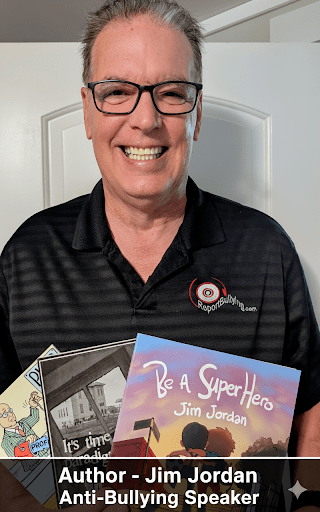
Featured Anti-Bullying Speaker
Jim Jordan — Bullying Prevention & Mental Health Speaker
Jim Jordan specializes in anti-bullying school assemblies for U.S. schools, with age-specific student programs plus teacher training and parent presentations. Schools in New York can compare programs and contact ReportBullying.com about current pricing and availability.
Jim Jordan is a bullying-prevention and mental-health speaker for U.S. schools, with separate presentations by grade band plus teacher training and parent education options.
Questions New York Schools Often Ask
What should New York schools look for in an anti-bullying assembly speaker?
Look for age-appropriate content, a clear bullying-prevention focus, practical bystander guidance, and follow-up resources for staff and families.
Can one anti-bullying program serve multiple grade levels?
Yes, but the presentation should be adapted by grade band rather than delivered as one identical talk to every age group.