
The Social Aspects of Bullying
Status, exclusion and reputation can drive high school bullying. The assembly names those dynamics directly.
America’s Anti-Bullying School Speaker
Grades 9-12
Student leadership, cyberbullying, social aggression and campus culture
High school students do not need to be told bullying is wrong. They need a reason to act. This assembly challenges students to own the culture of their campus and gives them practical ways to influence it.
Program Overview
High school students do not need to be told bullying is wrong. They need a reason to act. This assembly challenges students to own the culture of their campus and gives them practical ways to influence it.
Every presentation is written for a specific grade band, so the language, examples and pacing match the students in the room. Magic, video and audience participation help keep attention high, while follow-up materials give staff a practical way to continue the message after assembly day.
The high school program treats students as emerging leaders. It addresses social aggression, reputation, exclusion, cyberbullying, digital consequences and the role students play in shaping campus culture, with practical reporting and peer-support choices rather than a lecture-only format.


At a Glance
What We Cover
Each topic is built around an age-appropriate anti-bullying approach that gives students and adults practical next steps.
Status, exclusion and reputation can drive high school bullying. The assembly names those dynamics directly.
By high school, harmful behavior can be emotional, social and difficult for staff to see. Students learn to recognize concerns and use school reporting pathways.
Students consider how online choices can persist beyond the moment and affect reputation, relationships and future opportunities.
Group chats, anonymous accounts and pile-ons, plus practical options for reporting and responding safely.
The Bystander Shift Framework
A simple framework administrators and teachers can reinforce after the presentation without asking students to put themselves at risk.
Identify bullying, social aggression, exclusion or harmful online behavior and distinguish it from ordinary peer conflict.
Support the targeted student, avoid feeding the audience around harmful behavior, and choose a safe action that fits the situation.
Use a trusted adult or established school reporting pathway when help is needed, especially when safety or repeated harm is involved.
See It In Action
Preview the presentation style before you book.
Middle / High School · Grades 6-12
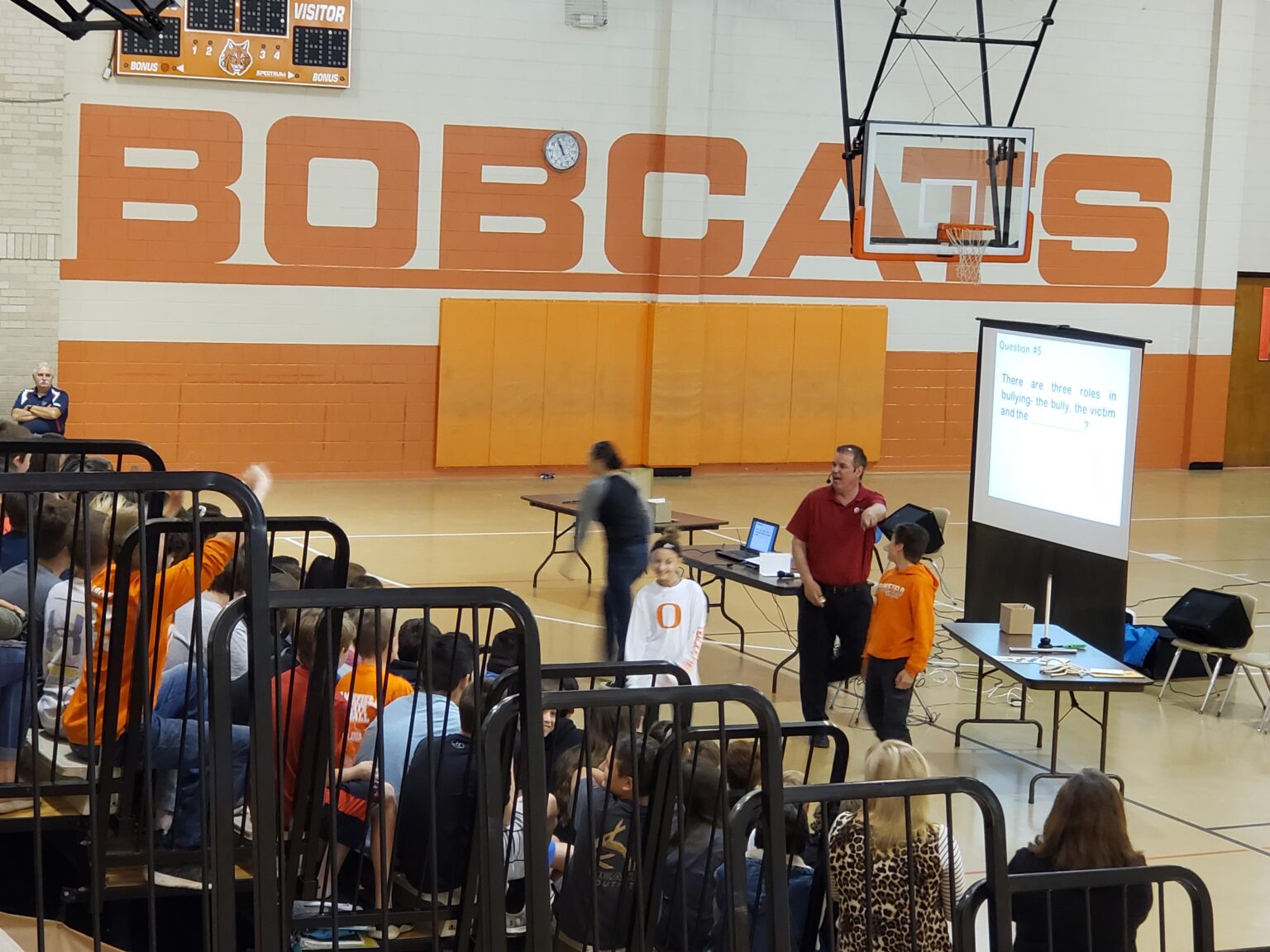
A high-energy anti-bullying assembly for middle and high school students covering cyberbullying prevention, social bullying and safe upstander choices.
Related grade level: Grades 6-12
Related resources
Related programs
Testimonials
Feedback from principals, counselors and teachers who have hosted the program.
Wow, that is the best school assembly we have ever had. All the teachers were coming up to me and asking “where did you find this guy?” Great job.
I will definitely recommend this presentation to other schools. Thank you for exceeding our expectations and bringing our staff and students so many smiles and important lessons today.
FAQ
Answers to what administrators ask most before booking.
Other Programs
Student assemblies can be paired with teacher training and a parent presentation when that fits your school's goals.
Grades PK-2
An action-packed, age-appropriate anti-bullying assembly built for pre-K through second grade. Magic, storytelling and audience pa…
Learn MoreGrades 3-5
Intermediate students learn to recognize the different forms of bullying, to intervene safely as bystanders, and to report without…
Learn MoreGrades 6-8
Middle school is where social dynamics get complicated and where bullying moves onto phones. This assembly meets students where th…
Learn MoreWhy Schools Book Jim Jordan
Schools choose Jim because every part of the experience—from grade-specific assemblies to staff and parent learning—supports practical bullying prevention.
A focused, proactive message that gives bystanders a safe role in changing school culture.
Shared language helps students and adults reinforce respect long after the assembly.
Students connect everyday choices with the way classmates experience school.
Students learn that influence is a responsibility—and that speaking up can protect others.
Simple Booking Process
A clear seven-step process makes it easy to plan a professional anti-bullying program.
Share your location, grade levels, audience size and preferred date range.
Review the audience, grade levels, school priorities and preferred date range.
Choose the age-appropriate assembly, training and parent presentation mix.
Agree on the date, routing, timing, space, technology and pricing.
Prepare staff, students and families for the presentation day.
Jim delivers age-appropriate assemblies and any selected educator or parent sessions.
Use shared language and follow-up resources to keep the prevention work visible.
Talk to our office about dates, grade levels and pricing. Most schools schedule student assemblies, teacher training and the parent evening on the same day.