
Anti-Bullying Assembly Speaker in Washington, District of Columbia
Plan a Washington, D.C. anti-bullying school assembly with student voice, bystander action, staff coordination and practical reporting guidance.

Washington, D.C. schools can frame bystander action as a form of community responsibility while keeping safety and adult accountability at the center. Students can influence peer norms, but they should never be expected to replace trained adults.
Schools in Washington looking for an anti-bullying assembly speaker should evaluate more than stage presence. The program should fit the developmental level of the audience, reinforce safe bystander choices and connect students to the school's own reporting and support procedures.
Connect community responsibility with everyday choices
Students exercise influence when they decide whether to laugh, share, include, ignore or get help. An assembly can show how those small decisions shape the climate around harmful behavior. The message should be specific enough that students can see what responsible action looks like in a hallway, classroom, activity or group chat.
Keep formal responsibility with adults
Student voice is valuable, but investigation, discipline, safety planning and mandatory procedures belong to school personnel. Washington schools can say this clearly so students understand that speaking up is not the same as taking over a case. Their job is to get the concern to adults who can respond.
Use student leadership for prevention, not enforcement
Student groups can promote inclusion, help design awareness activities and remind peers where to seek help. They should not collect allegations or confront students accused of bullying. Clear role boundaries allow student leadership to strengthen culture without creating safety or privacy problems.
Three Priorities for Washington School Leaders
Use student voice constructively
Keep adult support central
Connect choices to community responsibility
How to Prepare Before Assembly Day
Confirm grade groups, room setup, accessibility, supervision and presentation technology before the speaker arrives. More importantly, brief staff on the school's reporting procedure and decide which adults will be available if the presentation leads students to ask questions or disclose concerns.
The school should also decide how it will reinforce the message during the following week. Connect student voice with concrete responsibilities: do not join harmful behavior, support peers and involve trusted adults when help is needed.
A Practical 30-Day Follow-Up Plan
Within 48 hours: give teachers a short discussion prompt and remind students how to seek private help.
During week one: revisit use student voice constructively.
During weeks two and three: reinforce keep adult support central through classrooms, counseling or student leadership as appropriate.
By day 30: check whether students can identify trusted adults, describe safe bystander options and explain the school's reporting pathway.
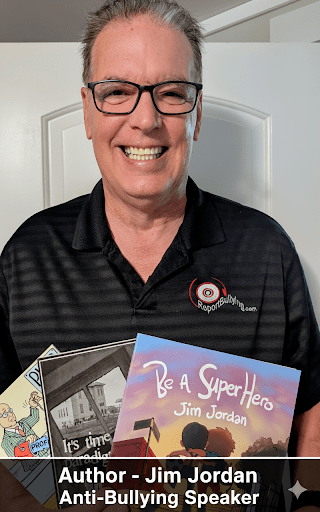
Featured Anti-Bullying Speaker
Jim Jordan — Bullying Prevention & Mental Health Speaker
Jim Jordan specializes in anti-bullying school assemblies for U.S. schools, with age-specific student programs plus teacher training and parent presentations. Schools in Washington can compare programs and contact ReportBullying.com about current pricing and availability.
Jim Jordan is a bullying-prevention and mental-health speaker for U.S. schools, with separate presentations by grade band plus teacher training and parent education options.
Questions Washington Schools Often Ask
Can student voice be part of an anti-bullying assembly?
Yes. Student questions, leadership and follow-up activities can make the message more relevant when adults provide clear boundaries and support.
Should schools connect bullying prevention with citizenship?
They can connect the themes through responsibility, respect and speaking up, while keeping the program focused on school safety and peer behavior.