
Anti-Bullying Assembly Speaker in Los Angeles, California
A practical guide for Los Angeles schools planning an anti-bullying assembly, including age-specific messaging, digital citizenship, staff preparation and follow-up.

For Los Angeles schools, bullying prevention increasingly crosses the line between campus life and digital life. A useful assembly should address what happens in hallways and classrooms while also acknowledging group chats, screenshots, social media pressure and online exclusion.
Schools in Los Angeles looking for an anti-bullying assembly speaker should evaluate more than stage presence. The program should fit the developmental level of the audience, reinforce safe bystander choices and connect students to the school's own reporting and support procedures.
Treat online and in-person behavior as one connected student experience
Students do not experience school relationships in separate boxes. A conflict that starts at lunch may continue in a group chat that night and return to campus the next morning. Los Angeles schools can make an anti-bullying assembly more relevant by connecting responsible online choices with the same expectations used in person: do not pile on, do not redistribute harmful content, preserve evidence when needed and involve an adult before the situation escalates.
Build a staff response plan before the speaker arrives
A strong presentation often prompts questions and disclosures. Teachers and counselors should know who receives reports, how urgent concerns are handled and what language to use when students ask for help. That preparation is especially important in large schools where a student may talk first to a coach, office employee, classroom teacher or advisor rather than a counselor.
Follow the assembly with short digital-citizenship conversations
The week after the event is a good time for brief classroom prompts about screenshots, rumor forwarding, private messages and group-chat exclusion. These do not need to become long lessons. A five- or ten-minute discussion that asks students to identify the safest next step can turn an emotional assembly message into practical decision-making.
Three Priorities for Los Angeles School Leaders
Connect bullying prevention with digital citizenship
Prepare staff before assembly day
Plan classroom reinforcement afterward
How to Prepare Before Assembly Day
Confirm grade groups, room setup, accessibility, supervision and presentation technology before the speaker arrives. More importantly, brief staff on the school's reporting procedure and decide which adults will be available if the presentation leads students to ask questions or disclose concerns.
The school should also decide how it will reinforce the message during the following week. Pair the student assembly with staff guidance on how to respond consistently when students report in-person or online bullying.
A Practical 30-Day Follow-Up Plan
Within 48 hours: give teachers a short discussion prompt and remind students how to seek private help.
During week one: revisit connect bullying prevention with digital citizenship.
During weeks two and three: reinforce prepare staff before assembly day through classrooms, counseling or student leadership as appropriate.
By day 30: check whether students can identify trusted adults, describe safe bystander options and explain the school's reporting pathway.
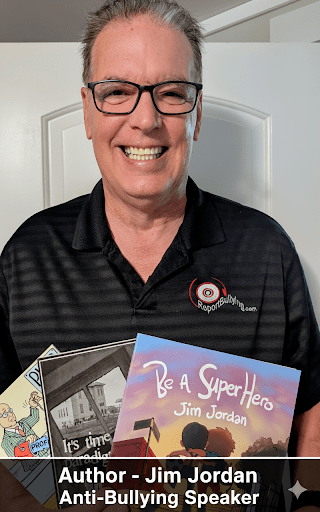
Featured Anti-Bullying Speaker
Jim Jordan — Bullying Prevention & Mental Health Speaker
Jim Jordan specializes in anti-bullying school assemblies for U.S. schools, with age-specific student programs plus teacher training and parent presentations. Schools in Los Angeles can compare programs and contact ReportBullying.com about current pricing and availability.
Jim Jordan is a bullying-prevention and mental-health speaker for U.S. schools, with separate presentations by grade band plus teacher training and parent education options.
Questions Los Angeles Schools Often Ask
Should a Los Angeles anti-bullying assembly include cyberbullying?
For most middle and high school audiences, it is useful to connect in-person bullying prevention with group chats, social media, screenshots and responsible reporting.
How can schools extend the message after the assembly?
Use short classroom discussions, counselor availability, parent communication and repeated reminders about trusted adults and reporting channels.