
Anti-Bullying Assembly Speaker in Mesa, Arizona
Mesa schools can plan an anti-bullying assembly focused on respectful peer behavior, safe bystander choices, reporting and follow-up.

Mesa schools can make prevention easier to apply by teaching students how to recognize decision points: the moment they can choose to join, ignore, support, leave or get help.
Schools in Mesa looking for an anti-bullying assembly speaker should evaluate more than stage presence. The program should fit the developmental level of the audience, reinforce safe bystander choices and connect students to the school's own reporting and support procedures.
Slow down the moment before the crowd joins in
Many harmful situations grow because students react quickly. An assembly can help them notice the decision point before laughing, forwarding, commenting or gathering around. Mesa teachers can revisit that idea with short scenarios in which students name an alternative choice.
Teach support that does not escalate
A student can check on a peer privately, offer to walk with them to an adult or refuse to participate. These actions support the targeted student without creating a public confrontation that could make the situation worse.
Connect decision points to online behavior
The same framework works digitally. Before forwarding a screenshot, reacting to a humiliating post or staying in a pile-on, students can pause and choose not to amplify it. If evidence is needed, preserve it privately and use appropriate reporting channels.
Three Priorities for Mesa School Leaders
Teach decision points
Reinforce safe intervention
Use classroom discussion
How to Prepare Before Assembly Day
Confirm grade groups, room setup, accessibility, supervision and presentation technology before the speaker arrives. More importantly, brief staff on the school's reporting procedure and decide which adults will be available if the presentation leads students to ask questions or disclose concerns.
The school should also decide how it will reinforce the message during the following week. Use simple decision points students can recognize in real situations and revisit them during classroom follow-up.
A Practical 30-Day Follow-Up Plan
Within 48 hours: give teachers a short discussion prompt and remind students how to seek private help.
During week one: revisit teach decision points.
During weeks two and three: reinforce reinforce safe intervention through classrooms, counseling or student leadership as appropriate.
By day 30: check whether students can identify trusted adults, describe safe bystander options and explain the school's reporting pathway.
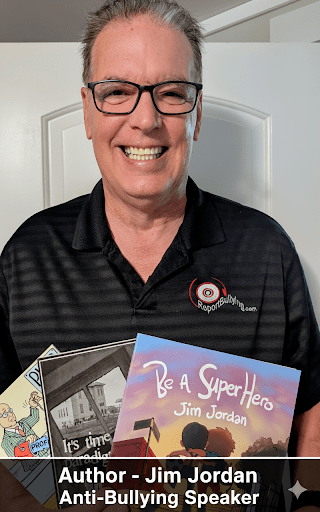
Featured Anti-Bullying Speaker
Jim Jordan — Bullying Prevention & Mental Health Speaker
Jim Jordan specializes in anti-bullying school assemblies for U.S. schools, with age-specific student programs plus teacher training and parent presentations. Schools in Mesa can compare programs and contact ReportBullying.com about current pricing and availability.
Jim Jordan is a bullying-prevention and mental-health speaker for U.S. schools, with separate presentations by grade band plus teacher training and parent education options.
Questions Mesa Schools Often Ask
What is a simple bystander framework?
Students can be taught not to join harmful behavior, to support the targeted student, and to involve a trusted adult when help is needed.
How can teachers reinforce this after the event?
A short discussion using hypothetical situations can help students apply the framework without focusing on real classmates.