
The First 30 Days After an Anti-Bullying Assembly: A School Follow-Up Plan
A practical 30-day school follow-up plan to reinforce an anti-bullying assembly through teachers, counselors, families, student leaders and reporting reminders.

The days after an anti-bullying assembly determine whether the event becomes a useful reference point or just another school memory. Follow-up does not need to become a month-long campaign filled with posters and announcements. In fact, overdoing it can make students tune out. The stronger approach is a small number of well-timed reminders that help students apply what they heard. The first thirty days should reinforce trusted adults, safe bystander choices, school reporting and the expectation that students do not have to handle harmful peer behavior alone. Staff also need opportunities to notice what the assembly surfaced. A good follow-up plan is quiet, practical and integrated into normal school routines.
Within 48 hours: help students translate the message
The first follow-up should happen while the presentation is still fresh. Teachers can use one short prompt: name a safe bystander action, identify a trusted adult, or explain what a student could do if a harmful screenshot appears in a group chat. Five minutes is enough. The purpose is retrieval, not another lecture.
Counselors and administrators should also be especially available during this window. Some students need time to process before speaking. Remind staff that a disclosure may come in an ordinary moment at the end of class or during lunch. A calm response and a clear handoff matter more than trying to solve the situation immediately in the hallway.
During week one: reinforce the reporting pathway
Students should hear exactly how to ask for help in their school. Repeat the names or roles of trusted adults, how to request privacy and where any formal reporting option can be found. Do not assume students remember this simply because it was mentioned on assembly day.
A school can also clarify what happens after a report. Students do not need a policy seminar, but they should understand that adults will listen, may need to share information for safety and will follow school procedures. Predictability can reduce fear and make help-seeking more realistic.
During week two: practice one or two realistic scenarios
Use fictional examples that match the age group. Elementary students might consider repeated exclusion at recess. Middle school students can discuss a rumor moving through a group chat. High school students can examine whether reposting or publicly arguing online is likely to help. Ask students to choose the safest next step and explain why.
Keep the scenarios hypothetical. Follow-up should never pressure students to identify classmates or disclose current incidents publicly. If a student raises a personal concern, move the conversation into the private support process rather than turning it into a classroom discussion.
During week three: involve families without creating alarm
Send a concise message to caregivers explaining the core themes students heard and the school's preferred contact pathway. Offer a few open-ended questions, such as what students learned about helping a peer or which adults they would approach at school. The goal is conversation, not interrogation.
Avoid sending dramatic warnings that imply the assembly uncovered a crisis. Families need clear, calm information. If the school has parent resources, digital-safety guidance or a parent presentation, this is a useful time to connect families with those supports.
By day 30: measure practical understanding
The school does not need a complex evaluation. Ask a small number of useful questions: Can students name a trusted adult? Can they identify a safe bystander action? Do they know how to seek private help? Do teachers know where to send a disclosure? These answers show whether the practical message is still visible.
Student enjoyment can be included in feedback, but it should not be the main measure. A popular speaker may create a strong experience; the school's responsibility is to determine whether that experience improved understanding and connected students with support.
Use what you learned to strengthen normal school practice
The first month may reveal issues that have little to do with the speaker. Students may not know the reporting process. Staff may use inconsistent language. Certain locations may generate repeated concerns. Treat those findings as useful information rather than evidence that the assembly failed.
An assembly is most valuable when it helps a school see where prevention systems can become clearer. After thirty days, the special follow-up can fade into normal practice: teachers continue reinforcing respectful behavior, counselors remain visible, administrators review patterns and families know where to contact the school when concerns arise.
Key Takeaways for Schools
Follow up quickly while the message is fresh
Repeat reporting options throughout the month
Measure practical understanding by day 30
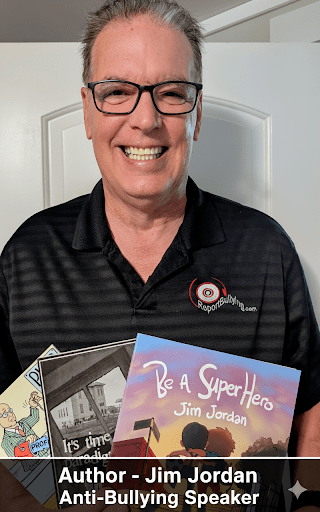
Featured Anti-Bullying Speaker
Jim Jordan — Bullying Prevention & Mental Health Speaker
Jim Jordan delivers grade-specific anti-bullying assemblies for U.S. schools, with teacher training and parent presentations available for a schoolwide approach. Schools can compare programs and contact the office to discuss audience fit, current pricing and availability.
Jim Jordan is a bullying-prevention and mental-health speaker for U.S. schools, with separate presentations by grade band plus teacher training and parent education options.
Frequently Asked Questions
How soon should schools follow up after an assembly?
A brief follow-up within 24 to 48 hours is useful, followed by spaced reminders during the first month.
Does follow-up need to be a full curriculum?
No. Short classroom prompts, counselor reminders, family communication and clear reporting information can create meaningful continuity.
What should schools measure after 30 days?
Check whether students know trusted adults, safe bystander choices and reporting pathways, and whether staff know how to respond to disclosures.