
Anti-Bullying Assembly Ideas for High Schools
High school anti-bullying assembly ideas that respect student maturity and address social status, online behavior, retaliation, peer support, reporting and adult responsibility.

High school students can detect a canned assembly almost immediately. They have heard the words respect, kindness and bullying for years, so another list of slogans is unlikely to change how they think. A useful high school assembly has to respect their maturity and focus on the decisions that become difficult when reputation, friendships and online visibility are involved. Students need to hear that supporting a peer does not require taking over a conflict, that reporting can be responsible without becoming public, and that the choices made in group chats or social media can shape real school relationships. The program should feel adult enough to earn attention while keeping the next steps practical.
Replace elementary language with a mature prevention framework
Older students do not need every interaction simplified into heroes and villains. They can discuss power, repeated harm, retaliation, social influence and the difference between disagreement and targeted behavior. A speaker can acknowledge that students may know only part of a situation and should not be expected to investigate it. Their role is to avoid contributing to harm, support peers and bring serious concerns to adults who are responsible for responding.
This approach earns credibility because it respects uncertainty. Students can be told that they do not need to prove a situation is bullying before asking for help. They can describe what they observed, how often it happened and why they are concerned. Adults can determine which policy or intervention applies.
Discuss digital permanence without using scare tactics
High school students understand that screenshots exist. The useful conversation is about judgment under pressure. A private message can become public. A repost can increase the audience around humiliation. A sarcastic reaction may look minor to the sender but become part of a larger pile-on. The assembly can show how students reduce harm by refusing to amplify content and by preserving evidence appropriately when someone needs adult help.
Avoid predicting that one mistake will permanently ruin a student's life. Fear-based digital messaging loses credibility quickly. Focus instead on the real consequence students can understand: online actions can intensify a peer situation, make repair harder and follow relationships back into school the next morning.
Talk openly about retaliation and social cost
Older students may stay silent because they fear being excluded, exposed or blamed for reporting. An assembly should not pretend those concerns are irrational. It should explain that schools need private reporting pathways and that students can begin with a trusted adult rather than confronting peers publicly.
Administrators should be prepared to explain what the school does after a report and how students can raise concerns about retaliation. The speaker can encourage help-seeking, but the school must provide the process. When students know where to go and what will happen next, the advice becomes more realistic.
Use peer support examples that preserve dignity
High school students can support a targeted peer without posting a public defense or making the situation larger. They might check in privately, offer to walk with a friend to a counselor, stop forwarding content or provide factual information to an adult. These actions are practical and do not require the student to become a mediator.
The assembly should also discourage public pressure for someone to disclose. Supporting a friend means listening and helping them connect with appropriate adults, not demanding details or promising to keep dangerous information secret. That distinction is important as students take on more independence and responsibility in their relationships.
Connect the message to leadership, teams and activities
High school peer culture extends far beyond classrooms. Athletics, clubs, theater, band, student government and online groups all create spaces where status and inclusion matter. Coaches and advisors should hear the same prevention language as teachers so students do not receive one message in class and another in activities.
Student leaders can help promote inclusion and reporting resources, but they should not investigate allegations or enforce consequences. Clear boundaries allow student leadership to improve culture while adults remain accountable for safety and formal response.
Measure whether the assembly changed understanding, not whether it was popular
A high school assembly may be entertaining and still fail to change what students know. A week later, ask whether students can identify at least one safe bystander action, one trusted adult option and the correct way to seek private help. Those questions are more informative than asking only whether the speaker was funny or inspirational.
Follow-up can also reveal gaps in the school's own process. If many students say they do not know where to report or do not trust that a private conversation is possible, that is useful information for administrators. The assembly becomes a starting point for improving communication, not a claim that every bullying issue has been solved.
Key Takeaways for Schools
Respect student maturity and social realities
Address retaliation and digital behavior directly
Keep adult responsibility and private reporting visible
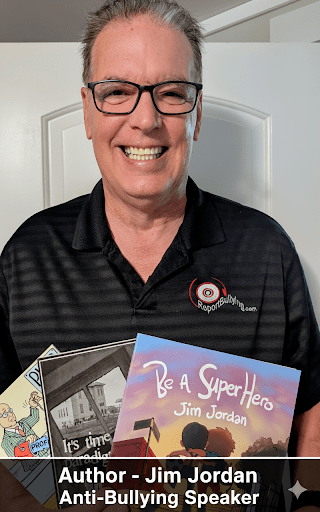
Featured Anti-Bullying Speaker
Jim Jordan — Bullying Prevention & Mental Health Speaker
Jim Jordan delivers grade-specific anti-bullying assemblies for U.S. schools, with teacher training and parent presentations available for a schoolwide approach. Schools can compare programs and contact the office to discuss audience fit, current pricing and availability.
Jim Jordan is a bullying-prevention and mental-health speaker for U.S. schools, with separate presentations by grade band plus teacher training and parent education options.
Frequently Asked Questions
Do high school students still need anti-bullying assemblies?
They can benefit when the program is developmentally appropriate and addresses mature topics such as social status, retaliation, online behavior, peer support and reporting rather than repeating elementary messaging.
How can a high school assembly avoid sounding preachy?
Use realistic situations, acknowledge social pressure, avoid exaggerated claims and give students choices rather than lecturing them with slogans.
What should happen after a high school assembly?
Schools should reinforce private reporting options, brief staff and advisors, use short follow-up discussions and make counselors or designated adults available for concerns.