
Anti-Bullying Assembly Checklist for School Administrators
A complete anti-bullying assembly checklist for school administrators covering speaker selection, grade grouping, staff preparation, student support, logistics, follow-up and evaluation.

A successful anti-bullying assembly is easier to manage when administrators treat it as a short project with a beginning, middle and follow-up rather than a single date on the calendar. The checklist should cover more than microphones and seating. Schools need to define the student goal, confirm developmental fit, brief staff, prepare counselors, make reporting options visible and decide what will happen after the speaker leaves. The event itself may last less than an hour, but the surrounding decisions determine whether students experience it as useful. This checklist is designed for principals, assistant principals and school teams that want a practical planning sequence without turning the assembly into a complicated production.
Four to six weeks before: choose the right program
Define the age groups, student needs and learning goals. Review the speaker's program descriptions, videos and references. Confirm that the content is specifically about bullying prevention rather than a generic motivational talk with a few related stories.
Ask how the program changes by grade, what bystander choices are taught, how cyberbullying is addressed and what the speaker expects the school to prepare. Confirm pricing, travel, timing, technical needs and cancellation terms directly with the office.
Two to three weeks before: build the school support plan
Identify the counselors, administrators or other trained staff who will receive disclosures. Review the school's reporting and documentation process with staff who may be approached by students.
Decide how the principal will explain trusted adults and private help after the presentation. If students are encouraged to speak up, the receiving process must be ready before the message is delivered.
One week before: brief teachers and families
Give teachers a short summary of the speaker's main language and the follow-up prompt they will use. Staff should know what to say if a student raises a personal concern and where that information goes.
Send families a concise notice explaining the purpose of the assembly, the main themes and the school's contact pathway. Avoid dramatic language or claims that the event will solve bullying on its own.
The day before: confirm logistics and student expectations
Check room access, sound, projection, seating, arrival time and schedule transitions. Confirm which grades attend each session and whether accommodations are needed.
Remind students that the assembly is for learning and that personal concerns should be shared privately with trusted adults rather than announced publicly. This protects students and keeps the event focused.
Assembly day: connect the stage message to the school
Have the principal or counselor close the presentation with school-specific reporting information. Name trusted adults or explain where they can be found. Make support staff available after the session.
Watch for students who may need space or a private conversation. The speaker should not be expected to manage individual cases; the school remains responsible for student support and formal response.
The next 30 days: reinforce and evaluate
Use a brief classroom prompt within forty-eight hours. Repeat reporting information during week one, use an age-appropriate scenario later in the month and send families a concise recap if you have not already done so.
By day thirty, ask whether students can identify a trusted adult and a safe bystander action. Gather teacher feedback and note any gaps in the school's own process. Use those findings to improve normal prevention practice rather than treating the assembly as a finished project.
Key Takeaways for Schools
Plan student support as carefully as event logistics
Connect the speaker message to school-specific reporting
Schedule 30 days of light follow-up before the event occurs
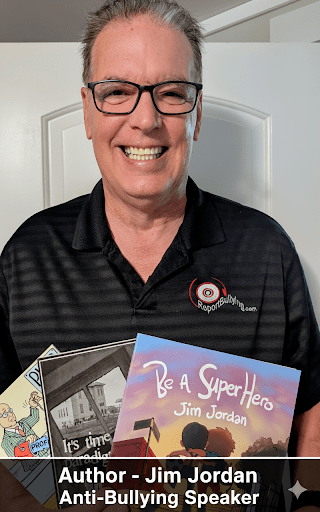
Featured Anti-Bullying Speaker
Jim Jordan — Bullying Prevention & Mental Health Speaker
Jim Jordan delivers grade-specific anti-bullying assemblies for U.S. schools, with teacher training and parent presentations available for a schoolwide approach. Schools can compare programs and contact the office to discuss audience fit, current pricing and availability.
Jim Jordan is a bullying-prevention and mental-health speaker for U.S. schools, with separate presentations by grade band plus teacher training and parent education options.
Frequently Asked Questions
How far in advance should a school book an anti-bullying speaker?
Availability varies, so schools should contact the speaker's office as early as practical and confirm current dates, pricing and travel requirements directly.
What is the most important day-of task?
Make sure students know where private help is available and how the speaker's message connects to the school's own reporting process.
What should happen after the assembly?
Use short classroom reinforcement, keep counselors and reporting pathways visible, communicate with families and check student understanding over the next month.