
How to Measure Whether an Anti-Bullying Assembly Had an Impact
Simple ways schools can evaluate an anti-bullying assembly using student understanding, trusted-adult awareness, bystander choices, staff readiness and follow-up.

Schools often evaluate assemblies by asking whether students liked the speaker. Engagement matters, but enjoyment is not the same as learning. A better evaluation asks whether students remember the practical choices the school wanted to strengthen and whether adults are more prepared to support those choices. You do not need a complicated research study to get useful information. A few questions asked at the right times can show whether students know trusted adults, understand safe bystander options and can explain how to report a concern. Staff feedback can reveal whether the speaker's language fits the school and whether the assembly surfaced gaps in the local process. Measurement should help the school improve follow-up, not manufacture a dramatic success statistic.
Decide what success means before the event
Choose two or three outcomes that are realistic for one presentation. Examples include students being able to name a trusted adult, identify a safe bystander action or describe what to do with harmful online content.
Avoid defining success as 'bullying will go down' immediately after the assembly. Incident data are influenced by many factors, and increased reporting can sometimes mean students are more willing to seek help rather than that behavior suddenly increased.
Ask one or two immediate understanding questions
At the end of the day or in the next class, ask a short retrieval question. Students can identify one action they remember or one place they can go for private help.
This shows what landed while the event is fresh. It is more useful than a simple thumbs-up rating because it checks understanding rather than entertainment value.
Repeat a small check one to four weeks later
The delayed check matters because memory fades. Ask the same practical questions after a week or a month. If students still know the reporting pathway and safe bystander options, the school has something concrete to reinforce.
If recall is weak, that does not automatically mean the speaker failed. It may show that the school needs more classroom follow-up or clearer reporting communication.
Collect staff observations
Teachers can report whether students referred to the assembly language, whether follow-up prompts worked and whether the content felt age-appropriate. Counselors can note whether students seemed clearer about how to seek help.
Staff feedback can also reveal operational problems. If teachers are unsure where disclosures go, the evaluation has identified a system issue the school can fix.
Treat reporting data carefully
A rise in reports after an assembly is not automatically negative. Students may be more willing to disclose concerns that already existed. A drop is not automatically proof that bullying decreased. Reporting behavior, awareness and actual incidents are different things.
Schools should interpret data within their normal procedures and over time. Avoid turning one month's numbers into a marketing claim about the assembly.
Use evaluation to improve the next thirty days
The purpose of measurement is action. If students cannot identify trusted adults, improve visibility. If online examples were unclear, use a digital scenario in advisory. If teachers need more support, provide a staff refresher.
A useful assembly gives the school something to build on. Evaluation tells administrators which part of that message needs more reinforcement and keeps expectations realistic.
Key Takeaways for Schools
Define realistic outcomes before the event
Measure practical understanding over time
Interpret reporting data cautiously
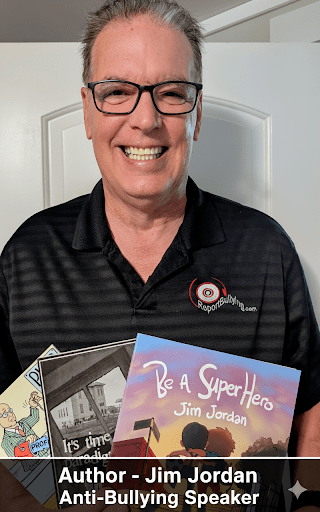
Featured Anti-Bullying Speaker
Jim Jordan — Bullying Prevention & Mental Health Speaker
Jim Jordan delivers grade-specific anti-bullying assemblies for U.S. schools, with teacher training and parent presentations available for a schoolwide approach. Schools can compare programs and contact the office to discuss audience fit, current pricing and availability.
Jim Jordan is a bullying-prevention and mental-health speaker for U.S. schools, with separate presentations by grade band plus teacher training and parent education options.
Frequently Asked Questions
Should schools survey students after an assembly?
A short survey can be useful, especially when it asks about understanding and support pathways rather than only enjoyment.
Does an increase in bullying reports mean the assembly failed?
Not necessarily. Increased reporting can reflect greater willingness to seek help. Incident and reporting trends should be interpreted carefully over time.
What is one simple impact question?
Ask students to name one trusted adult and one safe bystander action they could use in a real situation.