
High School New Year: A Better Parent Conversation About Bullying
A respectful back-to-school conversation parents can use with teens about bullying, harassment, retaliation, digital harm and seeking support.

High school students often want independence and may avoid reporting social harm because they fear embarrassment, retaliation or adults taking over. A useful parent conversation respects that concern while making safety non-negotiable. The aim is not to force disclosure; it is to establish how the family will respond if help is needed.
Start with partnership
Ask what support would feel useful if a problem happened: listening, documenting, practicing what to say, contacting a counselor or joining a meeting. Explain that immediate threats, sexual images, stalking, extortion or self-harm concerns require prompt adult action.
Avoid opening with a lecture or a demand to see every message. Teens are more likely to share when parents explain boundaries ahead of time and do not confuse help-seeking with weakness.
Name the situations that require escalation
Repeated humiliation, threats, discriminatory harassment, coercion, doxxing, impersonation and unwanted sexual content should not be treated as ordinary drama. Students should preserve relevant information and avoid retaliating or recruiting friends into a confrontation.
Parents should use the school or district reporting process and other appropriate authorities when required. Do not promise a particular disciplinary result or attempt to investigate other students independently.
Plan for retaliation concerns
Ask what the student thinks may happen if adults become involved. That answer can help the school plan transportation, class transitions, activities, online contact and check-ins. Retaliation concerns should be documented and included in follow-up.
A teen may prefer one trusted adult to coordinate communication. Requesting a clear point of contact can reduce repeated retelling and confusion while preserving the school’s need to involve authorized staff.
Protect normal life during follow-up
Bullying should not take over every family conversation. Keep supporting sleep, schoolwork, friendships, employment, sports and activities when safe. Ask before sharing the situation with extended family or community members.
Set a review date with the school and the teen. Ask whether the behavior stopped, whether the student feels safer and whether participation has improved. A quiet week alone does not prove the concern is resolved.
Respect privacy while making safety expectations clear
Teenagers may share only part of a story at first. Begin by listening and ask what kind of help they want, then explain any safety concern that requires adult involvement. Do not demand to read every conversation as the price of support. When digital evidence matters, discuss how to document relevant material and who needs to see it. Preserve the young person's dignity while keeping the focus on safety.
Some conduct may involve discrimination, sexual harassment, threats or other serious policy violations. Do not reduce these concerns to ordinary peer conflict. Record specific words or actions, preserve relevant messages and contact the school or appropriate authority promptly. Ask which policy applies, who coordinates the response and how the student can access support without repeatedly retelling the experience.
Ask whether there is a class, activity, route or online space the student is avoiding and what short-term change would help. Agree on a check-in date and a way to reach you. The young person should know they can return with new information even if the first conversation did not include every detail. If the initial response does not address safety, follow the stated school or district process.
Key Takeaways for Schools
Agree on how help will begin
Escalate serious digital and safety concerns
Include retaliation in the follow-up plan
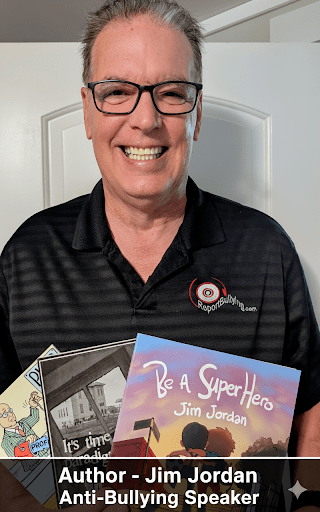
Featured Anti-Bullying Speaker
Jim Jordan — Bullying Prevention & Mental Health Speaker
Jim Jordan delivers grade-specific anti-bullying assemblies for U.S. schools, with teacher training and parent presentations available for a schoolwide approach. Schools can compare programs and contact the office to discuss audience fit, current pricing and availability.
Jim Jordan is a bullying-prevention and mental-health speaker for U.S. schools, with separate presentations by grade band plus teacher training and parent education options.
Frequently Asked Questions
What if a teen asks a parent not to tell anyone?
Listen and explain privacy limits honestly. Immediate safety, threats, sexual exploitation or self-harm concerns require adult action. For other concerns, involve the teen in planning the next step when possible.
Should parents confront the other student?
Use the school's established process. Direct confrontation can increase conflict, retaliation or privacy problems.
How often should parents follow up?
Agree on a predictable check-in schedule that matches the concern. Avoid turning every conversation into an interrogation, but do not assume silence means the issue ended.