
School Bus Bullying: A Back-to-School Safety Plan for Parents
Help children prepare for school bus routines, report repeated bullying and work with transportation staff on a clear, private follow-up plan.
The school bus is a moving, shared space with limited adult attention and changing peer groups. Children may also worry that reporting will affect where they sit or how other riders treat them. Before the first ride, parents can make the route and reporting process predictable while keeping responsibility for safety with adults.
Rehearse the transportation routine
Review the stop, bus number, pickup and drop-off expectations, seating rules and what to do if the child boards the wrong bus or misses a stop. Identify the driver and the school office as help points.
Teach the child not to move around a moving bus to escape a problem. If immediate danger exists, the child should alert the driver using the procedure the school provides.
Make the report specific
Ask what happened, where the students were seated, when it occurred, who was nearby and whether it has happened before. Record the child’s words without coaching a more dramatic version.
Report through the school or transportation department’s stated process. The driver may not have seen behavior while operating the vehicle, so a lack of direct observation does not mean the report should be dismissed.
Request a practical plan
Possible school-led steps may include assigned seating, additional supervision, a safe boarding plan, driver awareness and a named adult at arrival. The right response depends on policy, privacy and the facts of the case.
Ask who is responsible for follow-up and when the family will hear back. Avoid requesting private discipline details about another student; focus on the child’s safety and access to learning.
Check both the ride and the aftermath
Ask about the morning and afternoon rides separately. Also ask whether bus behavior continues at the stop, in school or online. Patterns across settings may require coordination between transportation and school staff.
Continue follow-up after an initial change. Confirm whether the child can board, ride and leave the bus without fear, and whether any retaliation or new behavior has appeared.
Coordinate with transportation adults
A transportation routine has several parts: the stop, boarding, the ride, drop-off and the walk to class. Ask which part feels difficult and whether the same students, seat or time are involved. Record route details, dates and specific behavior. A clear description helps the school distinguish an isolated disagreement from an ongoing pattern without asking the child to investigate.
Contact the school or transportation office through its stated process. Ask who supervises the route, how the driver can report concerns and whether a seating or check-in adjustment is appropriate. Do not ask the child to confront a group or police the bus themselves. Adults should create the plan and explain how the child can get help during the ride if the first contact is unavailable.
Review the plan after a few days. Ask whether the child feels safer getting on and off and whether behavior moved to the bus stop, school or online. Share new details with the school and request a follow-up date. Keep the conversation calm so the child can describe what happened without feeling responsible for the adults' reaction. Continue tracking until the concern has stopped.
Key Takeaways for Schools
Practice the bus routine
Report concrete details
Request an owned follow-up plan
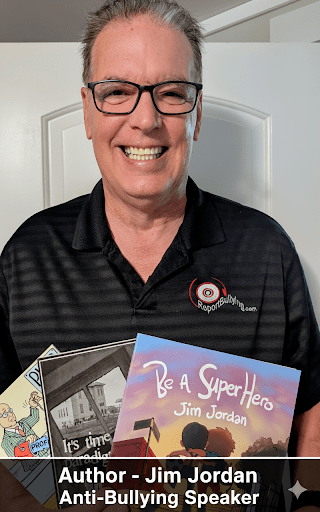
Featured Anti-Bullying Speaker
Jim Jordan — Bullying Prevention & Mental Health Speaker
Jim Jordan delivers grade-specific anti-bullying assemblies for U.S. schools, with teacher training and parent presentations available for a schoolwide approach. Schools can compare programs and contact the office to discuss audience fit, current pricing and availability.
Jim Jordan is a bullying-prevention and mental-health speaker for U.S. schools, with separate presentations by grade band plus teacher training and parent education options.
Frequently Asked Questions
Should a child change seats without permission?
Children should follow transportation safety rules. Parents can ask the school about an assigned or safer seat rather than encouraging movement on a moving bus.
What if the driver did not see the behavior?
Drivers must focus on driving. Report specific details through the designated process so transportation and school staff can review the concern.
Who should parents contact?
Follow the district's stated route, which may involve the school administrator, transportation office or both. Ask for one person to coordinate follow-up.