
Middle School First Day: A Parent Plan for Bullying and Cyberbullying
Prepare a middle school student for peer pressure, group chats, bullying reports and safe adult support during the first weeks of school.

Middle school often combines new schedules, larger peer groups and more independent technology use. Social pressure can move quickly between hallways and group chats. Parents can help by setting clear digital expectations, respecting the student’s growing independence and making adult help feel available rather than punitive.
Make the digital plan before a problem
Review privacy settings, passwords, location sharing and who may join group chats. Agree that harmful posts, threats, impersonation or repeated harassment should be saved and shown to a trusted adult rather than forwarded to friends.
Set a family rule that asking for help will not automatically lead to losing the phone. Safety consequences may still be necessary, but students are less likely to report if disclosure always feels like punishment.
Talk about audience power
Likes, laughing emojis, reposts and silent group participation can reward harmful behavior. Give the student alternatives: do not amplify the content, check on the targeted peer privately, leave the chat, preserve relevant information and report through the appropriate channel.
Direct public confrontation is not always safe or effective. Students should choose a response based on risk and involve adults when threats, repeated behavior or power differences are present.
Identify help across a changing schedule
A middle school student may see several teachers and spend less time with one primary adult. Name a counselor, administrator, favorite teacher and transportation contact. Ask how the school’s reporting tool works and when it is monitored.
Practice a concise report: what happened, where or on which platform, when, who saw it and whether it happened before. Students do not need to conduct their own investigation.
Use a weekly rhythm, not constant monitoring
Choose a regular time to review how school and online spaces are going. Ask about social energy, lunch, activities and group chats. Explain what parents will check and what privacy the student can expect.
When a problem is reported, separate immediate safety from longer-term discipline questions. Support the student, preserve information privately, follow the school’s procedure and schedule a follow-up. Do not post accusations on social media.
Balance independence with a clear adult safety net
Middle school students often want more privacy and control over friendships and devices. A plan is more usable when the young person helps shape it. Ask which adult at school feels approachable, how they prefer to report a concern and what kind of parent response feels supportive. Explain confidentiality limits calmly, especially when immediate safety is involved. Make clear the student can ask for help before collecting proof.
Discuss group chats and online spaces before conflict occurs. Agree that a young person can show a concerning message without automatically losing all device access. Preserve relevant evidence first, then decide whether to mute, block or report an account. Rules work better when students understand the safety reason and know what adults will do next.
Rehearse more than one option. A brief boundary statement may help in a one-to-one moment; leaving and finding an adult may be safer around a group. No student should have to prove confidence before receiving support. After the first week, ask what felt realistic and update names, locations and contact steps as schedules settle. Revisit the plan if behavior moves online or to a different setting.
Key Takeaways for Schools
Agree on digital-help rules
Teach students not to amplify harm
Name trusted adults across the schedule
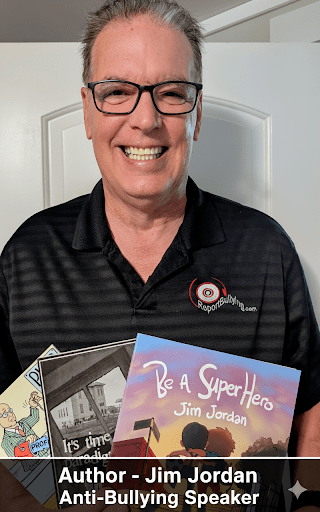
Featured Anti-Bullying Speaker
Jim Jordan — Bullying Prevention & Mental Health Speaker
Jim Jordan delivers grade-specific anti-bullying assemblies for U.S. schools, with teacher training and parent presentations available for a schoolwide approach. Schools can compare programs and contact the office to discuss audience fit, current pricing and availability.
Jim Jordan is a bullying-prevention and mental-health speaker for U.S. schools, with separate presentations by grade band plus teacher training and parent education options.
Frequently Asked Questions
Should parents read every middle school message?
Families should set transparent, age-appropriate supervision based on maturity and risk. Secret surveillance can damage trust; urgent safety concerns may require closer review.
What online information should be preserved?
Save relevant messages, usernames, dates, links and context without redistributing harmful content. Follow school and platform reporting procedures.
Can off-campus posts affect school?
Online behavior can affect school safety and learning. The school's response depends on district policy and applicable law, so families should report the impact and ask what process applies.