
How to Help Students Feel Safe Reporting Bullying
A school leader's guide to improving reporting confidence after bullying, with practical steps for privacy, trusted adults, response expectations and student mental health.

A reporting form is not the same as a reporting culture. Students may know that a form exists and still fear retaliation, disbelief, exposure or being labeled a problem. Reporting confidence grows when students see that adults listen, explain what happens next and protect their dignity. Schools can improve that confidence with small, repeatable actions that fit the existing process. The aim is not to promise a perfect outcome; it is to make the first step understandable and safer.
Explain what happens after a student speaks up
Students often avoid reporting because the process feels like a black box. Explain who receives a concern, how immediate safety is assessed, when another adult may need to be involved and how the student can ask for an update. Use plain language and avoid promising complete secrecy. Students deserve to know that safety information may need to be shared with appropriate staff, but their story should not become public conversation.
The explanation should be repeated in more than one place. Include it in orientation, advisory lessons, family communications, counselor conversations and prevention assemblies. A student should not have to remember a single poster from months ago. When a process is visible before a crisis, asking for help feels more like using a school service and less like making a dangerous announcement.
Create more than one trusted-adult path
Not every student connects with the same adult. A school can identify counselors, teachers, coaches, administrators and other trained staff who can receive a concern and route it correctly. The message should be simple: if the first adult is unavailable or the student does not feel comfortable, keep going to another trusted adult. That is not disrespect; it is persistence in seeking safety.
Staff members need to know their role when a report comes to them unexpectedly. They should listen, avoid making promises, record the concern through the right channel and contact the designated responder. A student should not be sent from office to office repeating the same story without explanation. Warm handoffs reduce the feeling that the student has become responsible for navigating the system alone.
Protect privacy without promising impossible secrecy
Privacy is different from secrecy. A school may need to share information with staff who are responsible for safety, investigation or support. Tell students that clearly and respectfully. At the same time, do not discuss reports in hallways, classrooms or group messages. Staff should share only what is needed and should follow district privacy rules.
Avoid public announcements that imply a particular student reported a concern. Do not ask the student to confront the person involved or prove their experience in front of peers. If the entire group needs a reminder, address expectations generally and keep the individual response private. These habits show students that reporting does not automatically mean losing control of their identity.
Respond to the first report with respect
The first adult response can shape whether a student seeks help again. Thank the student for telling, listen for immediate risk and ask what support is needed before moving into a long list of questions. Do not suggest that reporting is an overreaction or that the student should solve the issue alone. The adult can be compassionate while still explaining that the school must review the facts.
A respectful response does not require the adult to agree with every interpretation immediately. It requires the adult to take the concern seriously enough to follow the process. Use concrete language: 'I heard that this happened in the cafeteria on several days. I will share this with the person who handles reports, and I will tell you what to expect next.' Specificity is more reassuring than a vague promise to fix everything.
Use prevention education to normalize help-seeking
Students should hear that reporting repeated, threatening, humiliating or unsafe behavior is a responsible choice. That message belongs in prevention education, but it also belongs in ordinary classroom language. Teachers can reinforce that asking for help is not the same as trying to get someone in trouble. Adults decide how to investigate and respond; students decide when they need support.
A school can use fictional examples to let students practice the first step. Ask, 'Which adult could this student tell, and what might they say?' Keep the exercise private and avoid asking students to identify classmates. Practice lowers the barrier because students have already rehearsed the words before they need them.
Check whether the system feels usable
Administrators should test the reporting process from a student's perspective. Is the form easy to find? Is there a private option? Does someone respond promptly? Can students use it outside normal office hours when digital harm continues at night? Are language, disability or access needs addressed? These operational questions often matter more than adding another slogan to a wall.
Review anonymous themes rather than seeking personal details from students who do not need to share them. Ask whether students can name a trusted adult, explain the next step and describe how to get urgent help. The CDC describes school connectedness as students feeling cared for, valued and supported; reporting confidence is one practical way a school can show those values in action.
Key Takeaways for Schools
Make the reporting process predictable before students need it
Use multiple trusted-adult paths and warm handoffs
Protect privacy while explaining the limits of secrecy honestly
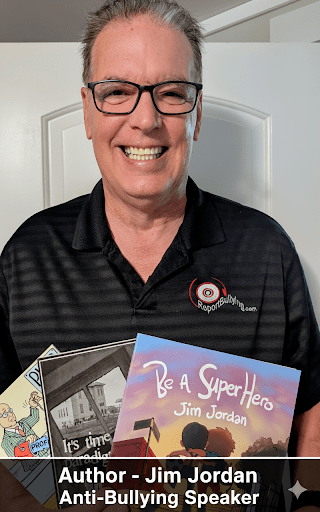
Featured Anti-Bullying Speaker
Jim Jordan — Bullying Prevention & Mental Health Speaker
Jim Jordan delivers grade-specific anti-bullying assemblies for U.S. schools, with teacher training and parent presentations available for a schoolwide approach. Schools can compare programs and contact the office to discuss audience fit, current pricing and availability.
Jim Jordan is a bullying-prevention and mental-health speaker for U.S. schools, with separate presentations by grade band plus teacher training and parent education options.
Frequently Asked Questions
How can a school make students more comfortable reporting bullying?
Explain the process clearly, provide multiple trusted adults, offer private ways to ask for help and respond respectfully and consistently when a student speaks up.
Should schools promise confidentiality?
Schools should explain privacy and its limits honestly. Safety concerns may need to be shared with appropriate staff, so complete secrecy should not be promised.
What if a student says the first adult did not help?
Encourage the student to tell another trusted adult and make sure staff have a clear escalation and warm-handoff process.