
Back-to-School Upstander Skills Parents Can Practice at Home
Five-minute family practices that help children support peers safely, avoid amplifying bullying and involve trusted adults during the school year.
Children may witness bullying long before an adult sees it. Telling them simply to ‘stand up’ can sound inspiring but leaves important safety questions unanswered. Parents can practice several low-risk choices so a child understands that helping does not always mean direct confrontation.
Teach a menu of safe choices
A child can refuse to laugh, move beside a peer, invite the peer away, get an adult, report privately, save a seat or avoid sharing harmful content. Different situations call for different choices.
Make clear that leaving to get help is not cowardly. Students should not intervene physically or confront a group when they may be placed in danger.
Practice the pause point
Read a fictional scenario and stop before the outcome: a student is mocked at lunch, excluded from a chat or targeted on the bus. Ask for three possible next steps and which one seems safest.
Keep examples fictional rather than asking the child to expose classmates or disclose a private experience during practice. The purpose is decision-making, not investigation.
Include digital bystander behavior
Teach children that forwarding, reacting and piling on can increase the audience. Safer choices include not sharing, checking on the targeted person privately, preserving relevant information and using approved reporting tools.
A child should not promise to keep threats, sexual images or self-harm concerns secret. These require prompt adult help.
Praise judgment, not heroics
When a child tells an adult or quietly includes someone, recognize the specific decision. Avoid celebrating risky confrontation as the only brave response.
Ask the school which bystander language it teaches so the family can reinforce the same options. Consistent language helps children remember what to do under pressure.
Practice small choices that interrupt harm safely
An upstander does not have to make a speech or confront a group. A young person can refuse to laugh, change the subject, invite a targeted student to join them or quietly tell an adult. Practice short phrases such as “That is not okay,” “Let's go,” or “I'm going to get a teacher.” Discuss which option is safest and remind the child that leaving to get help is responsible.
Make clear that physical intervention can increase danger and is not expected of a child. If someone is hurt or threatened, move to safety and get immediate adult help. Online, students can avoid sharing harmful content, preserve relevant information and report it rather than adding comments. Do not promise to keep threats or urgent safety concerns secret.
After a child tries to help, ask how it felt and whether an adult followed up. Praise the specific safe choice without making the student responsible for fixing the situation. Adults and schools must address the behavior. Practice with fictional examples, let the child choose from several safe responses and discuss what would make each response safer, such as moving near an adult or asking a friend to come along. Ask the school which bystander language it teaches so the family can reinforce consistent options at home. After practice, invite the child to suggest a safer option adults may have missed.
Key Takeaways for Schools
Offer several safe choices
Practice fictional decision points
Praise help-seeking and sound judgment
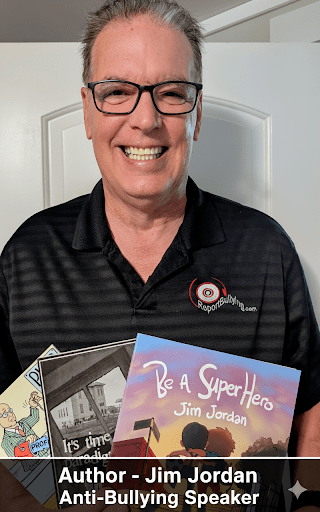
Featured Anti-Bullying Speaker
Jim Jordan — Bullying Prevention & Mental Health Speaker
Jim Jordan delivers grade-specific anti-bullying assemblies for U.S. schools, with teacher training and parent presentations available for a schoolwide approach. Schools can compare programs and contact the office to discuss audience fit, current pricing and availability.
Jim Jordan is a bullying-prevention and mental-health speaker for U.S. schools, with separate presentations by grade band plus teacher training and parent education options.
Frequently Asked Questions
What is an upstander?
An upstander chooses a safe action that supports someone or reduces harm. That may include getting an adult rather than confronting the student directly.
Should children record bullying on a phone?
Children should not create or share recordings that increase harm or violate rules. They should prioritize safety and report to an adult; relevant existing information can be preserved privately.
What if helping could make the child a target?
Choose a lower-risk option such as private reporting, checking in later or getting an adult. Schools should never require students to put themselves in danger.