
How Upstanders Help Create Safer and More Positive U.S. Schools
Discover how U.S. schools can teach students to become upstanders, respond safely to bullying and help build a safer, more positive school culture.
The biggest opportunity in bullying prevention may not be changing only the student doing the bullying. It may be teaching hundreds of other students how to respond when they see it.
About one in five U.S. high school students reported being bullied on school property in 2023.
Bystanders are present in approximately 80% of bullying situations.
Bystander intervention can stop bullying within 10 seconds 57% of the time.
What Kind of School Do Students Want to Attend?
Most students want the same basic things. They want to feel safe. They want friends. They want to belong. They want to walk into school without wondering whether someone is going to embarrass, intimidate or humiliate them.
Building that environment requires more than rules. It requires a culture in which students understand that their behavior toward one another matters.
Why Bystanders Matter So Much
Picture a school hallway. One student begins making fun of another student, and ten students are nearby. Who has the most influence over the social atmosphere? It may not be only the student responsible for the bullying. It may also be the ten students deciding how they will react.
Will they laugh, record it, join in or pretend not to notice? Or will they support the student, walk away, interrupt the situation safely or get help? That is why the mindset of the audience matters.
A school culture changes when students stop asking, ‘Is this my problem?’ and start asking, ‘What can I safely do to help?’
Give Students Choices They Can Actually Use
Telling students to ‘stand up to bullying’ sounds good, but it can be too vague. Students need practical choices they can remember and use.
1. Don't join in. Don't laugh, encourage, like, share, forward or record bullying for entertainment.
2. Support the student. Stand nearby, sit with them, walk with them or check on them afterward.
3. Redirect the situation. When it is safe, change the subject, interrupt the audience or encourage everyone to move on.
4. Get help. Find an adult who can safely take control of the situation.
5. Report what happened. If a student could be harmed, getting help is responsible—not something to be embarrassed about.
Students Should Never Be Asked to Put Themselves in Danger
Upstander training should never encourage students to physically confront another student or enter a dangerous situation. There is an enormous difference between helping and fighting.
Sometimes the best action is walking away and immediately finding an adult. Sometimes it is staying beside the student being targeted. Sometimes it is reporting something that happened earlier. Sometimes it is refusing to participate in a humiliating group chat.
Students need multiple options because every situation is different.
Bullying Prevention Is About Building Positive Behavior Too
Schools sometimes make bullying prevention sound entirely negative: don't bully, don't tease and don't harass. Those expectations are necessary, but schools can also teach students what they should do.
Include students who are being left out. Support someone who is being embarrassed. Invite someone to sit with you. Tell an adult when somebody may be unsafe. Refuse to participate in online humiliation. Use your influence to make kindness normal.
A Safer School Can Become a More Motivating School
Students learn best when they feel that they belong. Think about everything students are expected to do during a normal school day: raise their hand, give presentations, join teams, participate in clubs, make new friends, ask questions and try something they may not immediately be good at.
All of those activities require some level of confidence and emotional safety. A student who constantly worries about becoming someone's next target may be less comfortable taking those healthy risks.
That is why bullying prevention is connected to the larger goal of creating a supportive and motivating school environment.
Adults and Students Need to Work Together
Students cannot be expected to solve bullying by themselves. Adults remain essential. Teachers need training. Administrators need clear procedures. Students need trusted adults. Reports need to be taken seriously. Expectations need to be consistent.
Bystander education works best when students believe the adults around them will respond appropriately when they ask for help. Don't teach students only what not to do. Teach them what to do when someone needs help.
The Goal Is Bigger Than Stopping One Incident
The long-term goal is to change what students believe is normal. Cruelty should not create popularity. Humiliation should not create entertainment. Recording another student's embarrassment should not earn social approval.
Helping someone should be respected. Reporting a dangerous situation should be considered responsible. Including someone should be viewed as leadership. Supporting a classmate should become normal.
That is how schools begin moving from an anti-bullying campaign toward a genuine culture of respect.
One Message Every Student Should Hear
You don't have to fight. You don't have to put yourself in danger. You don't have to solve everything yourself. But you do have choices.
You can refuse to laugh or share the video. You can support the student who feels alone. You can get an adult. You can speak when it is safe.
You can help create the kind of school you would want someone else to create for you.
“Don't teach students only what not to do. Teach them what to do when someone needs help.”
Key Takeaways for Schools
Don't join in
Support the student
Get help and report
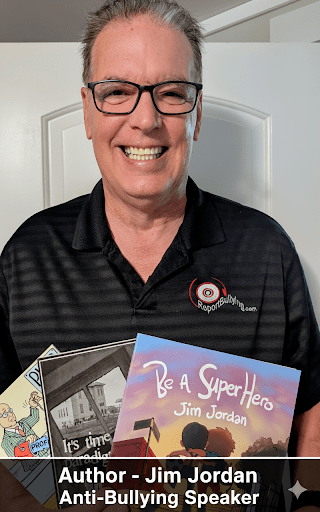
Featured Anti-Bullying Speaker
Jim Jordan — Bullying Prevention & Mental Health Speaker
Jim Jordan delivers grade-specific anti-bullying assemblies for U.S. schools, with teacher training and parent presentations available for a schoolwide approach. Schools can compare programs and contact the office to discuss audience fit, current pricing and availability.
Jim Jordan is a bullying-prevention and mental-health speaker for U.S. schools, with separate presentations by grade band plus teacher training and parent education options.
Frequently Asked Questions
What can an upstander do without confronting someone?
An upstander can refuse to join in, check on the targeted student, redirect attention when safe, preserve relevant information and get a trusted adult.
How can schools make upstander training safer?
Schools should provide several response options, make clear that physical intervention is not expected and ensure adults respond consistently when students ask for help.
Why does upstander behavior improve school culture?
It reduces the audience and social rewards surrounding harmful behavior while making support, inclusion and responsible reporting more visible and normal.