
A Cyberbullying Response Plan for U.S. Schools
Build a practical cyberbullying response plan for U.S. schools, including documentation, student support, family communication and safe digital follow-through.

Online behavior can follow students from home into the school day. A post, image, rumor or group-chat pile-on may be created off campus but still affect attendance, safety and learning at school. Schools need a calm, repeatable response that supports the student, preserves relevant information and follows district policy without turning staff into online investigators.
Start with immediate safety
Ask whether there is a threat, identity exposure, sexual image, extortion, self-harm concern or risk of retaliation. Escalate urgent concerns through the school's established safety process and contact emergency services when appropriate.
Do not ask a student to keep engaging with the account or to confront the sender. A trusted adult can help the student stop contact, adjust privacy settings and move to a safer space while the school determines next steps.
Preserve information without spreading it
Tell students and families to preserve relevant messages, dates, usernames and links through appropriate channels. Avoid forwarding harmful material to broad staff groups or posting about the situation publicly. Share only what authorized personnel need to review the concern.
Screenshots can lose context, so note when and where the content appeared. The goal is a clear record, not a crowd-sourced investigation by students.
Explain what the school can and cannot do
Families deserve a point of contact, a timeline for follow-up and an honest explanation of privacy limits. Staff should not promise a specific discipline outcome or disclose private information about another student.
The school can explain which policies apply, what support is available, how to report new incidents and when the next check-in will happen. Clear expectations reduce confusion and repeated retelling.
Teach digital bystander choices
Students can help by refusing to like or forward harmful content, checking in privately, reporting through the platform when appropriate and getting a trusted adult. Directly arguing in a public thread can increase the audience and the harm.
Digital citizenship lessons should connect to the school's real reporting pathway. Students need to know where online concerns go when they affect school safety or learning.
Turn the response into everyday school practice
A post, lesson or meeting matters most when students can recognize the same choices during an ordinary school day. Pick one or two actions from this guide and connect them to arrival, transitions, lunch, activities, advisory and digital communication. Staff should use the same plain language, point students toward the same trusted adults and know how to document a concern through local procedure.
Leaders can review the plan with teachers, counselors, supervisors and families without sharing private student details. Ask what is working, where students still feel uncertain and which handoffs are slow. Small adjustments, such as naming a backup contact or adding supervision during a transition, can make a support plan easier to use.
The school should set a follow-up date instead of treating a quiet week as proof that the problem is over. Check whether students can describe a safe next step, whether adults respond consistently and whether the affected student can participate in learning with dignity. Use those observations to strengthen prevention over time.
Key Takeaways for Schools
Assess urgent risk before investigating
Preserve evidence privately and responsibly
Give families a clear contact and follow-up timeline
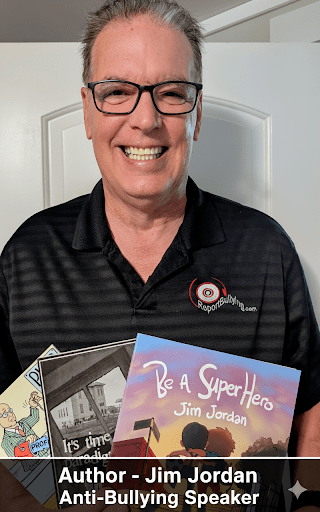
Featured Anti-Bullying Speaker
Jim Jordan — Bullying Prevention & Mental Health Speaker
Jim Jordan delivers grade-specific anti-bullying assemblies for U.S. schools, with teacher training and parent presentations available for a schoolwide approach. Schools can compare programs and contact the office to discuss audience fit, current pricing and availability.
Jim Jordan is a bullying-prevention and mental-health speaker for U.S. schools, with separate presentations by grade band plus teacher training and parent education options.
Frequently Asked Questions
What should a school do first when cyberbullying is reported?
Assess immediate safety, support the student, preserve relevant information through appropriate channels and follow district policy for response and documentation.
Should students reply to the person posting harmful content?
Usually students should not be asked to confront or continue the exchange. Safe options include disengaging, preserving information, using platform tools and contacting a trusted adult.
Can off-campus online behavior affect school response?
It can affect the school environment and student safety. Staff should follow applicable district policy and legal guidance rather than assuming every off-campus post is handled the same way.