
Safe Bystander Training for Middle and High Schools
Help middle and high school students respond safely to bullying as bystanders, with practical choices that reduce audience support and connect peers to trusted adults.

Many students witness bullying before an adult does. They may want to help but worry about becoming the next target, making the situation worse or losing social standing. Effective bystander education gives students several safe choices and makes clear that adults, not students, are responsible for investigation and consequences.
Replace one heroic script with several safe choices
Students can refuse to laugh, leave a harmful conversation, invite a peer to a different activity, check in privately, save a seat, report a concern or get an adult. These actions can reduce the audience that gives harmful behavior social power.
Direct confrontation is not required and may be unsafe when there is a threat, a power imbalance or a risk of retaliation. Teach students to choose the action that fits the setting.
Practice the decision point
Use short, fictional scenarios from class, lunch, sports, group chats and hallways. Pause before the outcome and ask what a student could do next. Practice more than one answer so students learn judgment rather than memorizing a slogan.
Avoid asking students to identify real classmates or disclose personal experiences in front of peers or families. Hypothetical practice protects privacy and keeps the focus on safe choices.
Make adult help easy to find
A bystander may be willing to help but unsure which adult to approach. Name the trusted adults, locations and reporting options students can use during the school day. Explain what happens after a concern is shared without promising complete secrecy.
Staff should coordinate so a student does not have to repeat the story to multiple adults before someone takes ownership of the handoff.
Reinforce courage without rewarding risk
Praise students for getting help, protecting privacy and refusing to amplify harm. Do not celebrate risky confrontation as the only form of leadership. Quiet, thoughtful action is still action.
Teachers can revisit one scenario during advisory or homeroom each week for a month. Repetition helps students recall the options when emotions are high.
Turn the response into everyday school practice
A post, lesson or meeting matters most when students can recognize the same choices during an ordinary school day. Pick one or two actions from this guide and connect them to arrival, transitions, lunch, activities, advisory and digital communication. Staff should use the same plain language, point students toward the same trusted adults and know how to document a concern through local procedure.
Leaders can review the plan with teachers, counselors, supervisors and families without sharing private student details. Ask what is working, where students still feel uncertain and which handoffs are slow. Small adjustments, such as naming a backup contact or adding supervision during a transition, can make a support plan easier to use.
The school should set a follow-up date instead of treating a quiet week as proof that the problem is over. Check whether students can describe a safe next step, whether adults respond consistently and whether the affected student can participate in learning with dignity. Use those observations to strengthen prevention over time.
Key Takeaways for Schools
Teach multiple safe bystander options
Practice fictional scenarios without public disclosures
Make the reporting pathway concrete
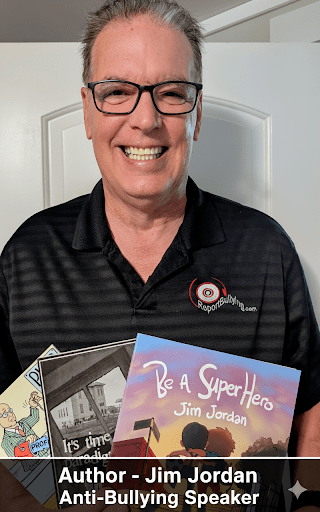
Featured Anti-Bullying Speaker
Jim Jordan — Bullying Prevention & Mental Health Speaker
Jim Jordan delivers grade-specific anti-bullying assemblies for U.S. schools, with teacher training and parent presentations available for a schoolwide approach. Schools can compare programs and contact the office to discuss audience fit, current pricing and availability.
Jim Jordan is a bullying-prevention and mental-health speaker for U.S. schools, with separate presentations by grade band plus teacher training and parent education options.
Frequently Asked Questions
What is a safe bystander response?
It might include getting an adult, checking in privately, refusing to join or share, leaving the interaction or using a reporting channel. The right choice depends on the situation.
Should every student confront the aggressor?
No. Schools should not teach confrontation as a requirement. Safety, power differences and retaliation risk matter.
How can schools measure bystander learning?
Ask students to identify trusted adults and describe several safe options in fictional scenarios. This measures understanding without asking students to reveal private experiences.