
Teacher Classroom Routines That Reduce Bullying Opportunities
Practical classroom routines that help U.S. teachers reduce bullying opportunities, notice exclusion, protect student dignity and reinforce safe help-seeking.

Teachers cannot control every student interaction, but classroom routines shape who gets attention, who is included and how quickly adults notice a problem. Small, consistent practices can reduce opportunities for public humiliation and make it easier for students to ask for help.
Plan participation so attention is not a weapon
Avoid routines that require students to reveal private information, choose teams publicly under pressure or perform in ways that invite ridicule. Offer structured choices and predictable turn-taking.
When group work is necessary, define roles, monitor changes and provide a way for students to report a concern privately. Inclusion should not depend on one student's ability to win a social negotiation.
Correct behavior without public humiliation
A correction can set a boundary without turning a student into a spectacle. Use calm, specific language about the behavior and move follow-up conversations out of the audience when possible. Tell the class what behavior is expected without describing a private report. Then check in with the involved students separately, document what was observed and connect any ongoing concern to the school response process.
Public sarcasm can become part of the classroom culture even when adults intend it as humor. Model the dignity and accountability students are being asked to practice. Students learn as much from the teacher's tone, consistency and follow-through every single day as from the posted rule.
Watch transitions and unstructured minutes
Bullying opportunities often appear while students enter, pack up, line up, change groups or wait for technology. Use active supervision and position yourself where students can be seen and approached.
Ask colleagues what they notice in shared spaces. Patterns across classrooms may reveal a need for a broader plan.
Make help-seeking ordinary
Remind students how to request a private conversation and who else they can approach if you are unavailable. Respond to concerns calmly and follow the school's process.
A brief weekly scenario can reinforce safe bystander choices without implying that a particular student is under suspicion. Repetition builds shared language.
Turn the response into everyday school practice
A post, lesson or meeting matters most when students can recognize the same choices during an ordinary school day. Pick one or two actions from this guide and connect them to arrival, transitions, lunch, activities, advisory and digital communication. Staff should use the same plain language, point students toward the same trusted adults and know how to document a concern through local procedure.
Leaders can review the plan with teachers, counselors, supervisors and families without sharing private student details. Ask what is working, where students still feel uncertain and which handoffs are slow. Small adjustments, such as naming a backup contact or adding supervision during a transition, can make a support plan easier to use.
The school should set a follow-up date instead of treating a quiet week as proof that the problem is over. Check whether students can describe a safe next step, whether adults respond consistently and whether the affected student can participate in learning with dignity. Use those observations to strengthen prevention over time.
Key Takeaways for Schools
Structure participation and group work
Correct behavior without public humiliation
Supervise transitions and make help-seeking routine
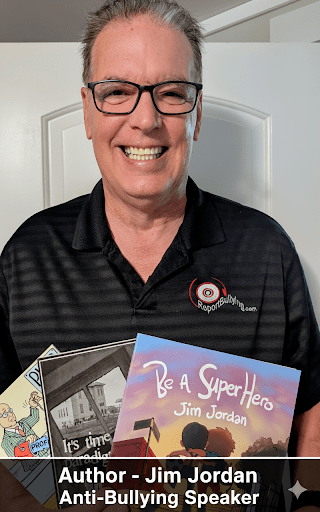
Featured Anti-Bullying Speaker
Jim Jordan — Bullying Prevention & Mental Health Speaker
Jim Jordan delivers grade-specific anti-bullying assemblies for U.S. schools, with teacher training and parent presentations available for a schoolwide approach. Schools can compare programs and contact the office to discuss audience fit, current pricing and availability.
Jim Jordan is a bullying-prevention and mental-health speaker for U.S. schools, with separate presentations by grade band plus teacher training and parent education options.
Frequently Asked Questions
Can classroom routines prevent all bullying?
No. Routines can reduce opportunities and improve adult visibility, but schools also need supervision, policy, family communication and support systems.
What should a teacher do after a student discloses a concern?
Listen calmly, thank the student for speaking up, record relevant facts according to policy and connect the concern to the designated school response process.
How can group work be safer?
Use clear roles, structured grouping, adult monitoring and a private way for students to raise concerns. Avoid making one student responsible for managing peer harm.