
Bullying Prevention for Parents: How Schools Can Bring Families Into the Conversation
A practical guide for schools involving parents in bullying prevention without creating panic, public conflict or mixed messages for students.
Families can strengthen bullying prevention when schools give them a clear role. Problems start when caregivers receive only a vague notice, hear about an incident through social media or feel that contacting the school means entering an adversarial process. Parent communication should make the prevention message understandable, explain where concerns belong and encourage calm, private problem-solving. Schools do not need to turn every family into a policy expert. They do need to make expectations and contact pathways easy to find. When parents understand what students are being taught about bystanders, reporting and digital behavior, conversations at home can reinforce the school message instead of contradicting it.
Tell families what students are actually learning
After an anti-bullying assembly, send a concise recap. Explain the student takeaways in ordinary language: do not join harmful behavior, support peers, preserve online evidence responsibly and get a trusted adult. This gives caregivers something concrete to discuss at home.
Avoid sending a generic message that says only that the school 'takes bullying seriously.' Families benefit more from knowing what the school is asking students to do and who they should contact with questions.
Give parents conversation starters, not interrogation scripts
Open-ended questions work better than demanding to know whether a child has been bullied. Parents can ask what part of the assembly stood out, what a safe bystander can do or which adults at school students can approach.
Some children will not want to discuss personal experiences immediately. Families can keep the door open by listening without pressing for names or promising a response before they understand the situation.
Make the school contact path simple
Parents should know where to bring a concern and what information is useful. A concise description of what happened, when it occurred and who may have observed it is more helpful than a public social-media post or a long email copied to unrelated people.
Schools can reduce frustration by acknowledging contact and explaining the next step. They may not be able to discuss another student's discipline, but they can tell the reporting family how their own child's safety and support will be addressed.
Address cyberbullying without encouraging online escalation
When parents see a harmful post, the instinct to defend a child publicly can be strong. Schools can encourage families to save relevant evidence, avoid amplifying the content and use platform tools while contacting appropriate school staff when peer relationships or school safety are affected.
Public arguments between adults can increase the audience and make student relationships harder to repair. A calm private process is usually more protective than a parent-led online confrontation.
Explain the limits of what schools can share
Families may want detailed information about consequences for another student. Privacy obligations and school procedures often limit what can be disclosed. Explain this early so a lack of detail is not mistaken for inaction.
Schools can still communicate meaningful information about the reporting student's support, safety plan, points of contact and what to do if concerns continue. Clear boundaries help preserve trust even when every requested detail cannot be provided.
Offer parent education before a crisis
Parent presentations, digital-safety sessions or short resource pages are most useful before families are in the middle of a high-emotion situation. Prevention education can explain bullying patterns, reporting, online evidence, listening skills and when to involve school staff.
A school that gives families shared language in advance is better prepared for difficult conversations later. The goal is not perfect agreement on every incident. It is a predictable partnership around student safety and responsible communication.
Key Takeaways for Schools
Give parents clear student-facing language
Keep concerns in private school channels
Prepare families before a crisis occurs
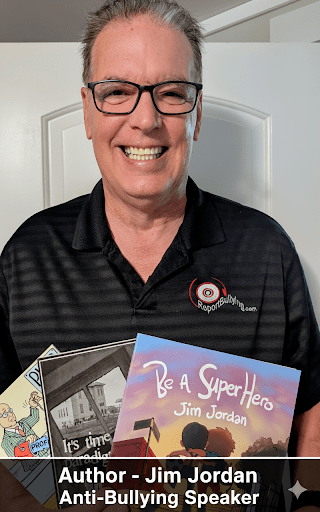
Featured Anti-Bullying Speaker
Jim Jordan — Bullying Prevention & Mental Health Speaker
Jim Jordan delivers grade-specific anti-bullying assemblies for U.S. schools, with teacher training and parent presentations available for a schoolwide approach. Schools can compare programs and contact the office to discuss audience fit, current pricing and availability.
Jim Jordan is a bullying-prevention and mental-health speaker for U.S. schools, with separate presentations by grade band plus teacher training and parent education options.
Frequently Asked Questions
What should schools send parents after an anti-bullying assembly?
A short recap of the main themes, conversation starters and the school's preferred contact and reporting pathways.
Should parents confront another family about bullying?
Direct confrontation can escalate a situation. Families should generally use school and appropriate support channels, especially when student safety or repeated peer behavior is involved.
Why can't schools tell parents another student's consequences?
Schools may be limited by privacy requirements and procedures. They can still discuss the reporting student's safety, support and next steps.