
Teacher Training for Bullying Prevention: What Staff Need Before Students Speak Up
Teacher bullying-prevention training priorities including disclosures, documentation, privacy, reporting, retaliation, digital evidence and consistent adult response.

Staff training becomes most important at the moment a student chooses to speak. The adult's first response can determine whether the student feels heard, whether important information is captured and whether the concern reaches the right people. Teachers do not need to become investigators. In fact, trying to investigate in the classroom can create new problems. They need to know how to listen, what they can promise, what details matter, where the information goes and how to respond if the student is afraid of retaliation. A schoolwide presentation for students is stronger when teachers have already discussed the adult side of the process.
Teach a calm first response
When a student discloses a concern, the teacher should slow the conversation down. Thank the student for speaking up, listen for immediate safety issues and avoid reacting with disbelief, anger or a promise to fix everything instantly.
A calm response communicates that the adult can handle the information. Students may minimize or stop talking when they sense panic, judgment or pressure.
Clarify the difference between listening and investigating
Teachers need enough information to understand the concern and follow school procedure. They do not need to interview witnesses, confront another student or determine guilt on the spot. Those actions can complicate a formal response.
Training should identify the factual basics staff may need to record: what the student says happened, when and where, whether it is repeated, who may have observed it and whether the student feels unsafe now.
Use honest language about privacy
Staff should avoid promising complete secrecy. A better statement is that the teacher will protect the student's privacy as much as possible but may need to share information with the people responsible for safety and response.
This protects trust later. Students are better served by an honest explanation than by a reassuring promise the adult cannot keep.
Train every adult on the internal handoff
A prevention system fails when only counselors know what to do. Classroom teachers, coaches, educational assistants and other staff may be the first person a student approaches. Everyone needs to know who receives the concern and how urgent situations are escalated.
The handoff should be simple enough to remember under pressure. If staff are unsure, students can be bounced around or asked to repeat painful details unnecessarily.
Include cyberbullying and digital evidence
Teachers may receive screenshots, messages or videos. Training should explain how staff should preserve or forward relevant information within school procedures and when not to ask students to circulate more content.
Adults should also understand that an online incident can affect school safety and relationships even when it occurred off campus. The response should follow school policy rather than assumptions about what the school can or cannot address.
Plan for retaliation and follow-up
Ask whether the student fears what might happen after reporting. That information may change how the school approaches safety and communication. Staff should know where to send retaliation concerns and how students can report new incidents.
Teacher training should also emphasize follow-up. The classroom teacher may not know every outcome, but they can remain attentive, reinforce support options and make sure the student is not left wondering whether adults forgot.
Key Takeaways for Schools
Listen calmly before acting
Know the handoff and documentation process
Never promise secrecy you cannot keep
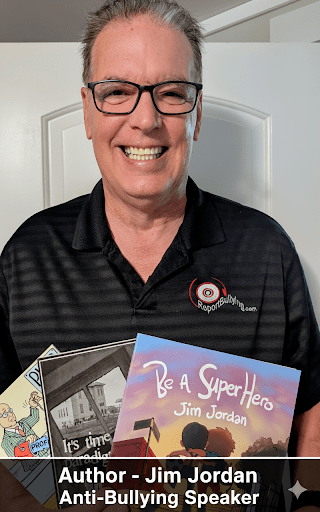
Featured Anti-Bullying Speaker
Jim Jordan — Bullying Prevention & Mental Health Speaker
Jim Jordan delivers grade-specific anti-bullying assemblies for U.S. schools, with teacher training and parent presentations available for a schoolwide approach. Schools can compare programs and contact the office to discuss audience fit, current pricing and availability.
Jim Jordan is a bullying-prevention and mental-health speaker for U.S. schools, with separate presentations by grade band plus teacher training and parent education options.
Frequently Asked Questions
Should teachers investigate bullying reports?
Teachers should gather enough information to follow school procedure but generally should not conduct a full investigation unless that is part of their assigned role.
What should a teacher say when a student reports bullying?
Thank the student, listen calmly, assess immediate safety, explain privacy limits and follow the school's reporting and documentation process.
Who needs bullying-prevention training?
Any staff member students may approach should understand the basic response and handoff, even if specialists or administrators manage formal investigations.